


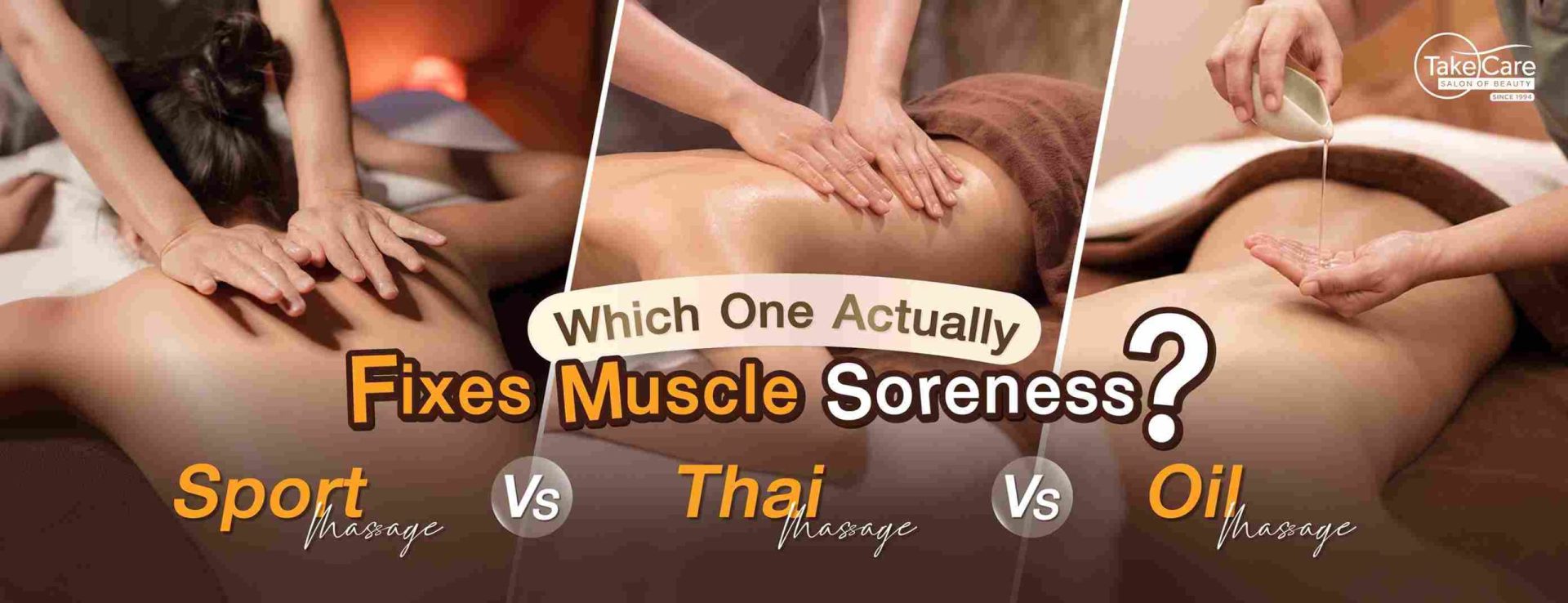
Sport Massage vs Thai Massage vs Oil Massage for Muscle Soreness?
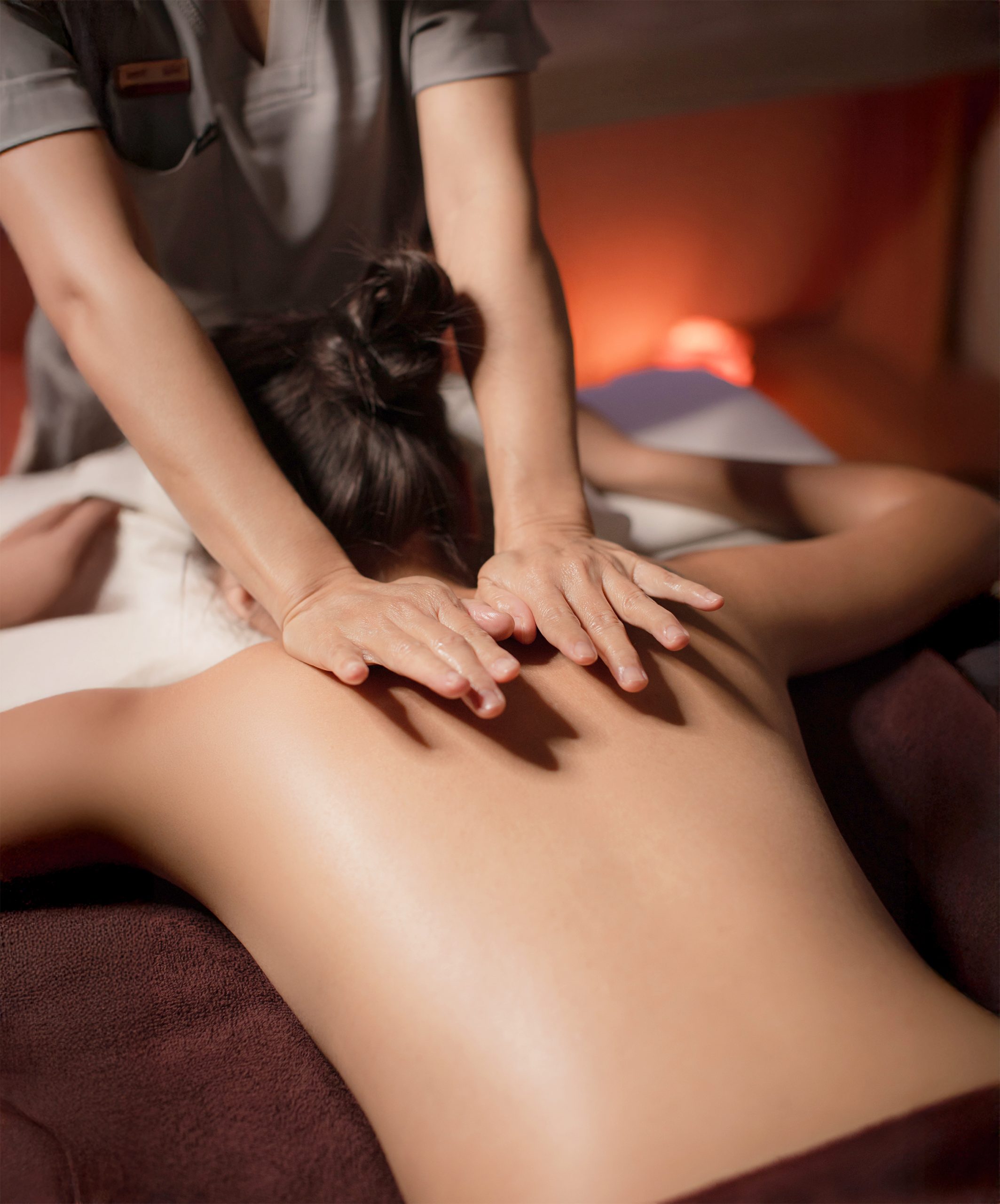
Sport recovery & deep tissue work in Bangkok
Sports massage in Bangkok for muscle that refuses to let go
You have run the long sessions, lifted heavy, or sat at a desk until your shoulders turned to stone — and the relaxation massage you booked only softened the surface. Muscle that takes the same load week after week builds up fascial adhesions and trigger points that sit deeper than a general massage reaches. Sports massage at One Man Club and Take Care Salon of Beauty is built for that: assessed, targeted deep tissue work in a private room, for men and women, with English-speaking therapists across eight Bangkok branches.
What is sports massage, and why is rest alone not enough?
Sports massage is a targeted deep tissue treatment for muscle that is loaded repeatedly by training or posture. The therapist assesses which muscle groups are overworked, then uses deep transverse friction, myofascial release, trigger point therapy and assisted stretching to break up adhesions, release tight bands and restore range of motion. Sleep and rest let the body recover systemically, but nothing in passive rest applies the mechanical pressure needed to free deep fascia or release a trigger point.
- Best for: runners, cyclists, triathletes, weight training, and desk workers with chronic neck and shoulder tension
- Session length: 60, 90 or 120 minutes
- Price in Bangkok: 1,800 / 2,500 / 3,400 THB
- Typical frequency: weekly to fortnightly while training hard, every 2–4 weeks otherwise
When the same muscles take load again and again — running, cycling, lifting, or holding one posture all day at a desk — they stay partly contracted and metabolic by-products linger in the tissue. Over time the fascia wrapping the muscle thickens and sticks to neighbouring layers. The muscle loses elasticity and develops tender knots known as trigger points, which often refer pain somewhere else entirely. That is why a week of easy days can leave you rested but still tight.
| Factor | Rest / Thai massage / relaxation oil massage | Sports massage |
|---|---|---|
| Depth of pressure | Surface to superficial muscle layers, for general relaxation | Works into deep muscle layers and the fascia that has bound to them |
| Trigger point work | No specific search for tender points in individual muscles | Locates and releases the trigger points that are the source of referred pain |
| Techniques used | Gliding strokes, pressure along energy lines, passive joint stretching | Deep transverse friction, myofascial release, trigger point therapy, assisted stretching |
| Main purpose | Reduce stress and general fatigue | Restore overworked muscle, improve range of motion, reduce re-injury risk |
| Fit for athletes | Pleasant, but does not address training-specific pain patterns | Designed for people who train or load their muscles regularly |
Sports massage vs Thai massage vs oil massage: which should you book?
A massage built around how trained muscle actually behaves
Sports massage grew out of applied anatomy and sports physiology rather than tradition. Your therapist first assesses which muscle groups carry your training load, where the tight bands and adhesions sit, and how much pressure your tissue will tolerate. Only then do they choose the technique — deep transverse friction to realign fibres, myofascial release to free bound layers, trigger point therapy to release referred pain, and assisted stretching to give the tissue its length back.
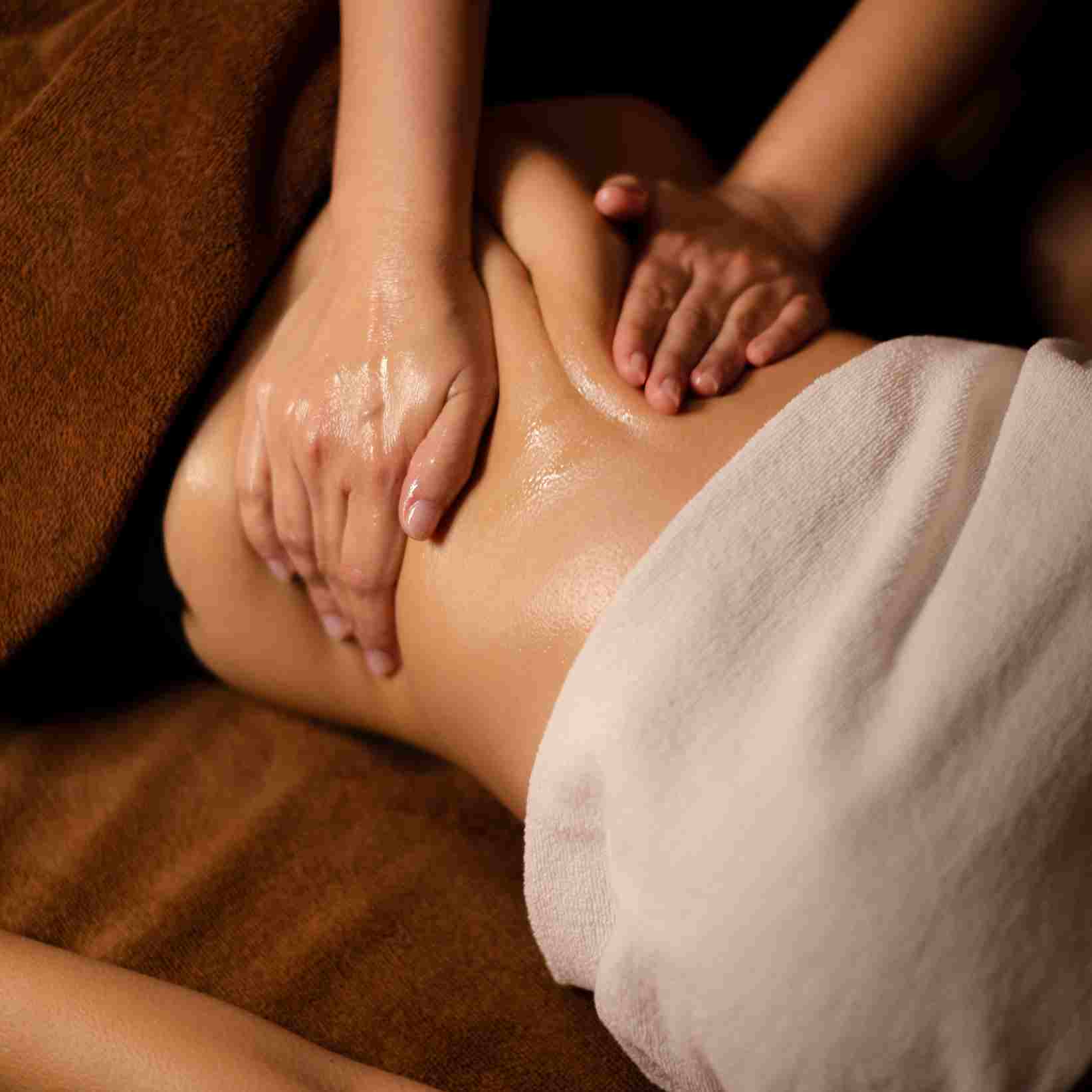
Traditional Thai massage works differently: pressure along the ten primary energy lines plus passive joint stretching, for whole-body balance. Aromatherapy oil massage uses slow gliding strokes to settle the nervous system. Both have their place. But if your complaint is a specific muscle that hurts because of what you keep asking it to do, sports massage is the one that goes straight at it.
Region-specific, not one routine for everyone. Time goes where the problem is.
Pressure matched to your tissue, set during the assessment and adjusted as you speak up.
Stretching built into the session so joints regain full, usable range.
What sports massage helps with, and who it suits
Beyond feeling looser afterwards, sports massage plays a practical role in recovery for people who train regularly — particularly for the two complaints runners and lifters report most often, iliotibial band syndrome and plantar fasciitis.
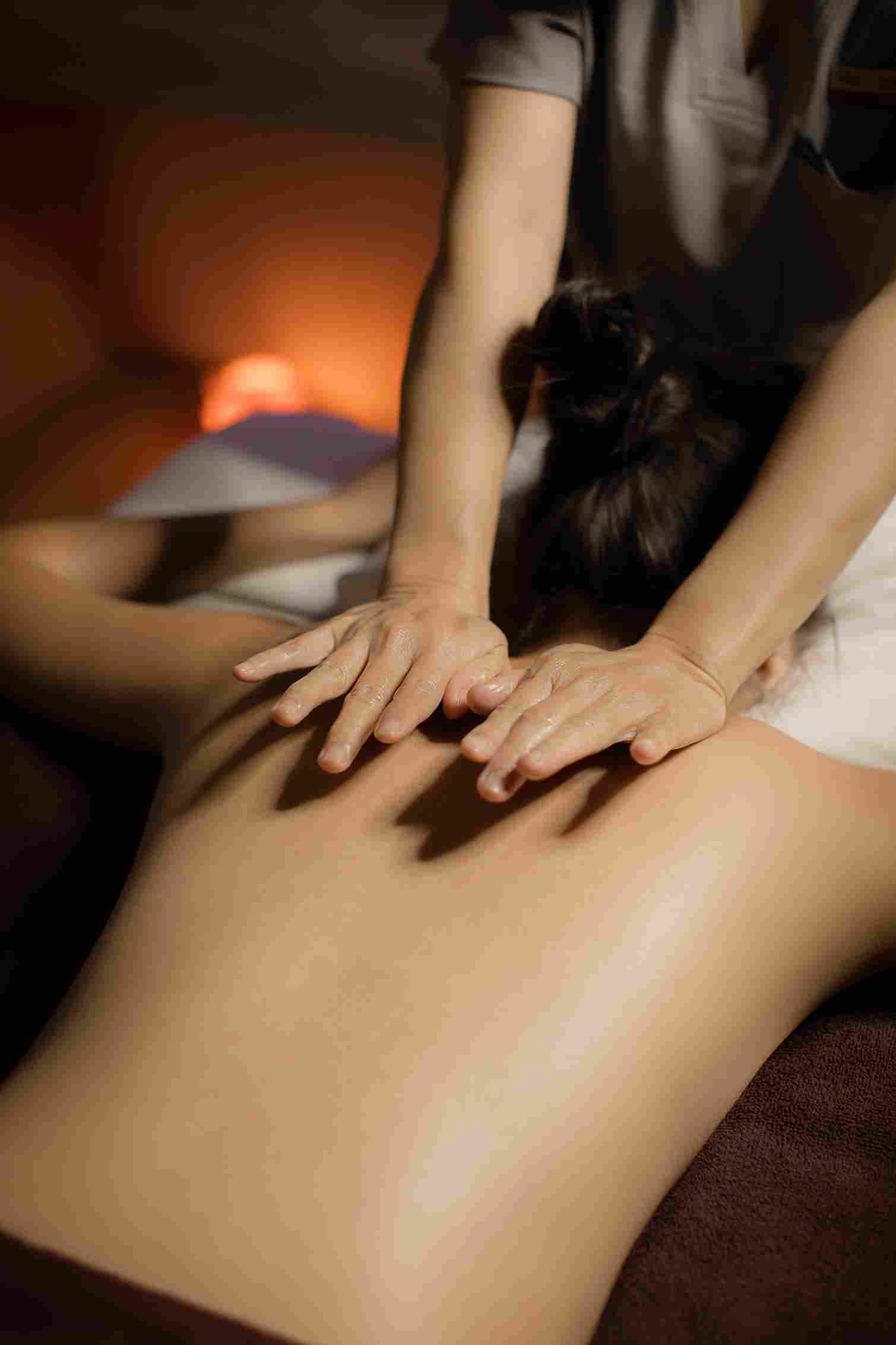
More range of motion
Releasing muscle and fascia around a joint lets it travel further, which lowers the injury risk that comes from moving through a restricted range.
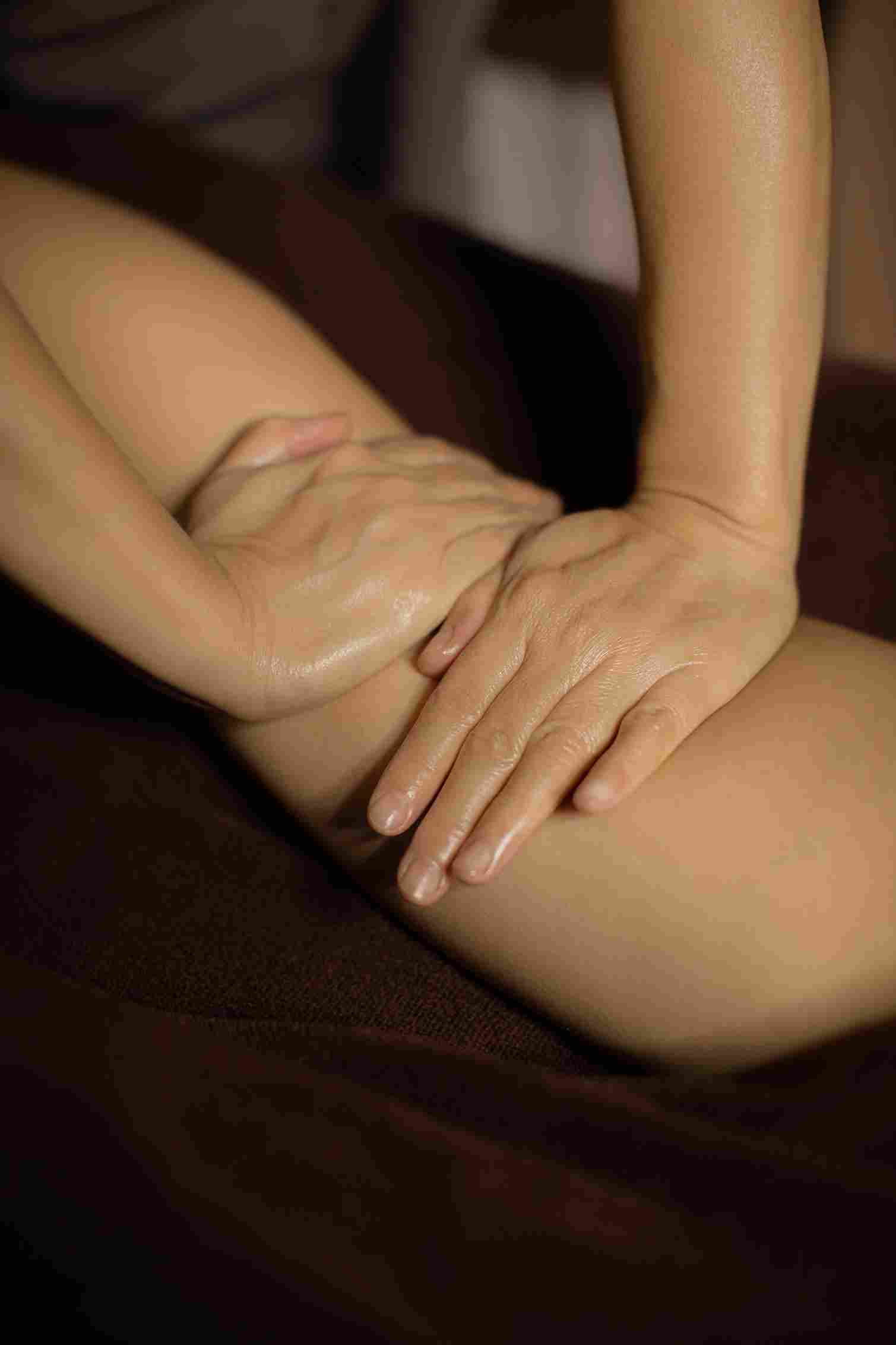
Relief for IT band syndrome
Pain on the outside of the knee often traces back to a tight iliotibial band, common in runners and cyclists. Myofascial release combined with stretching has been shown to reduce that tension and pain.[4]
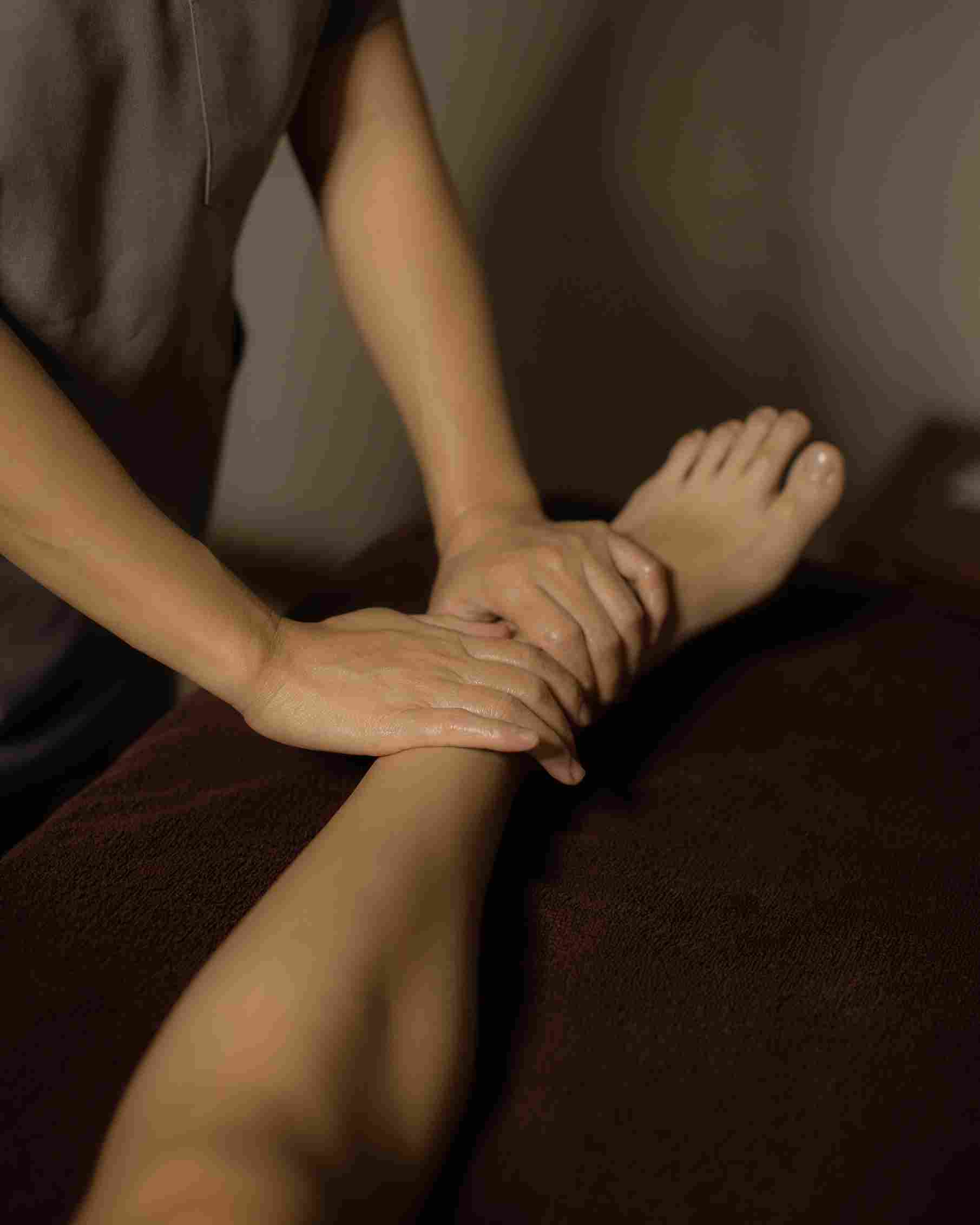
Help with plantar fasciitis
Heel pain from an inflamed plantar fascia is common in distance runners. Releasing trigger points in the calf and foot reduces the pull transmitted into the fascia.[5]
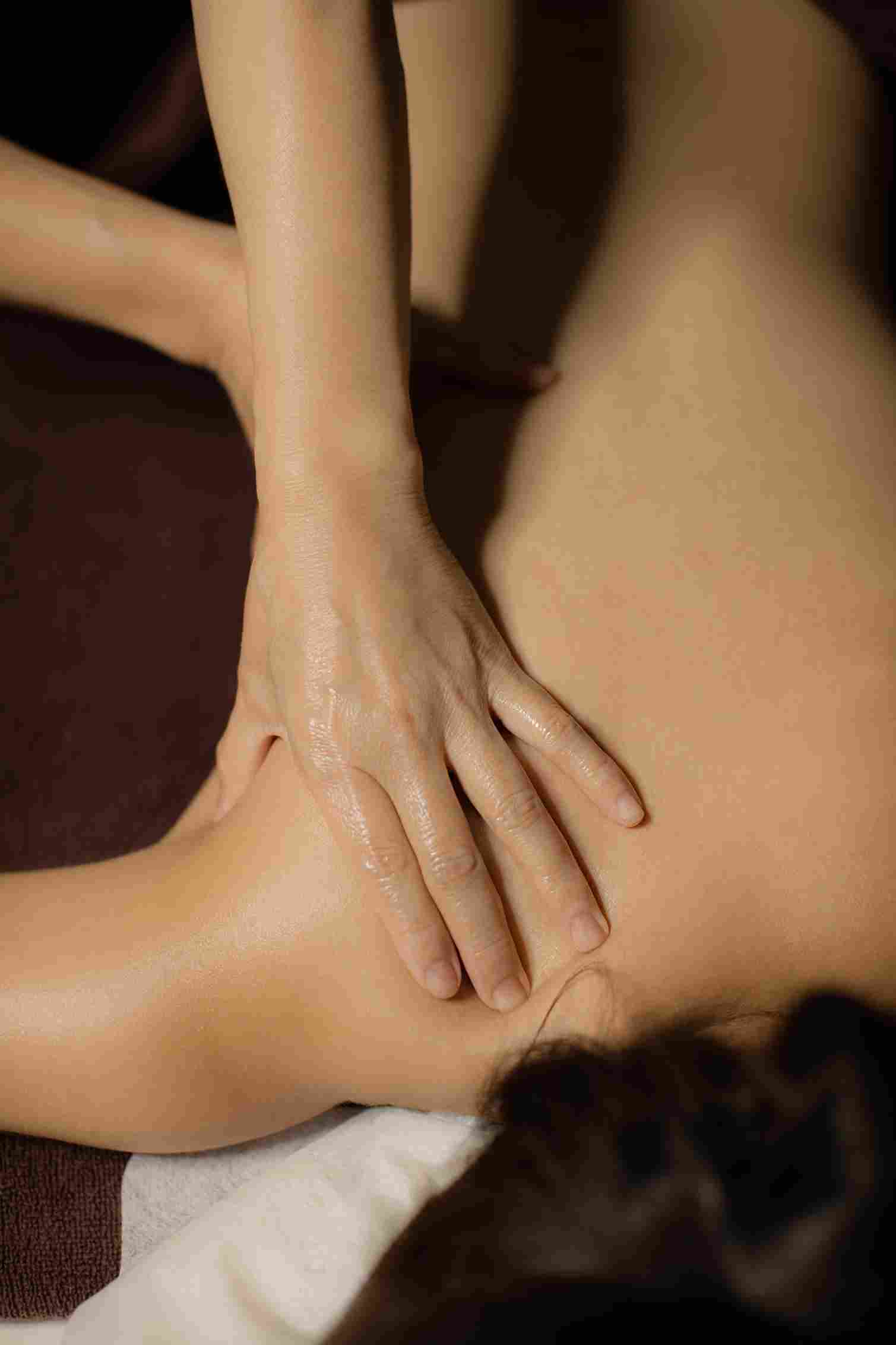
Better circulation through tired tissue
Flushing strokes raise local blood flow, helping the body clear metabolic by-products out of worked muscle more quickly.
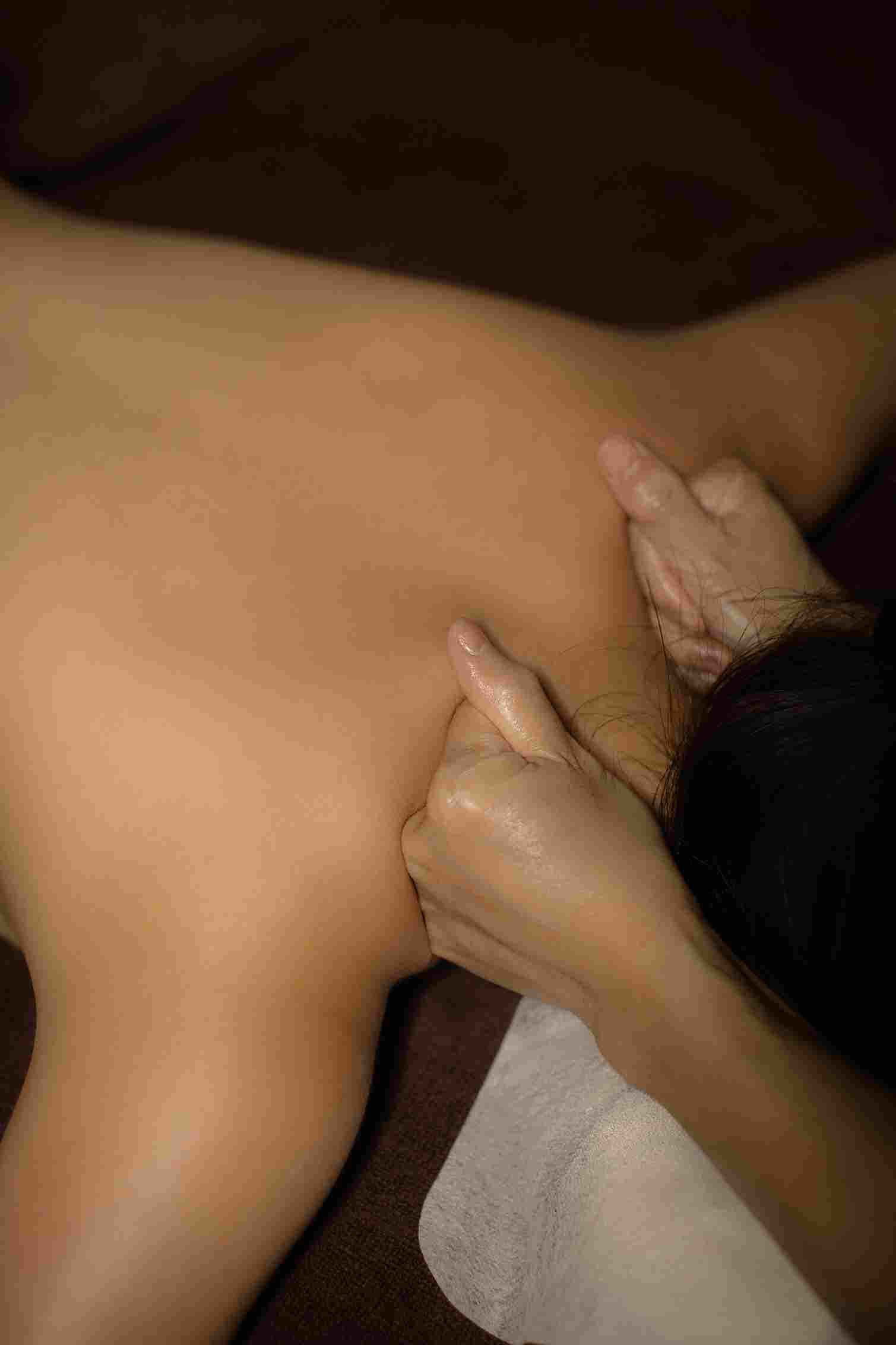
Release for long-standing knots
Trigger points left alone tend to refer pain elsewhere in the body. Releasing them at the source calms the referred ache and lets the muscle rest.
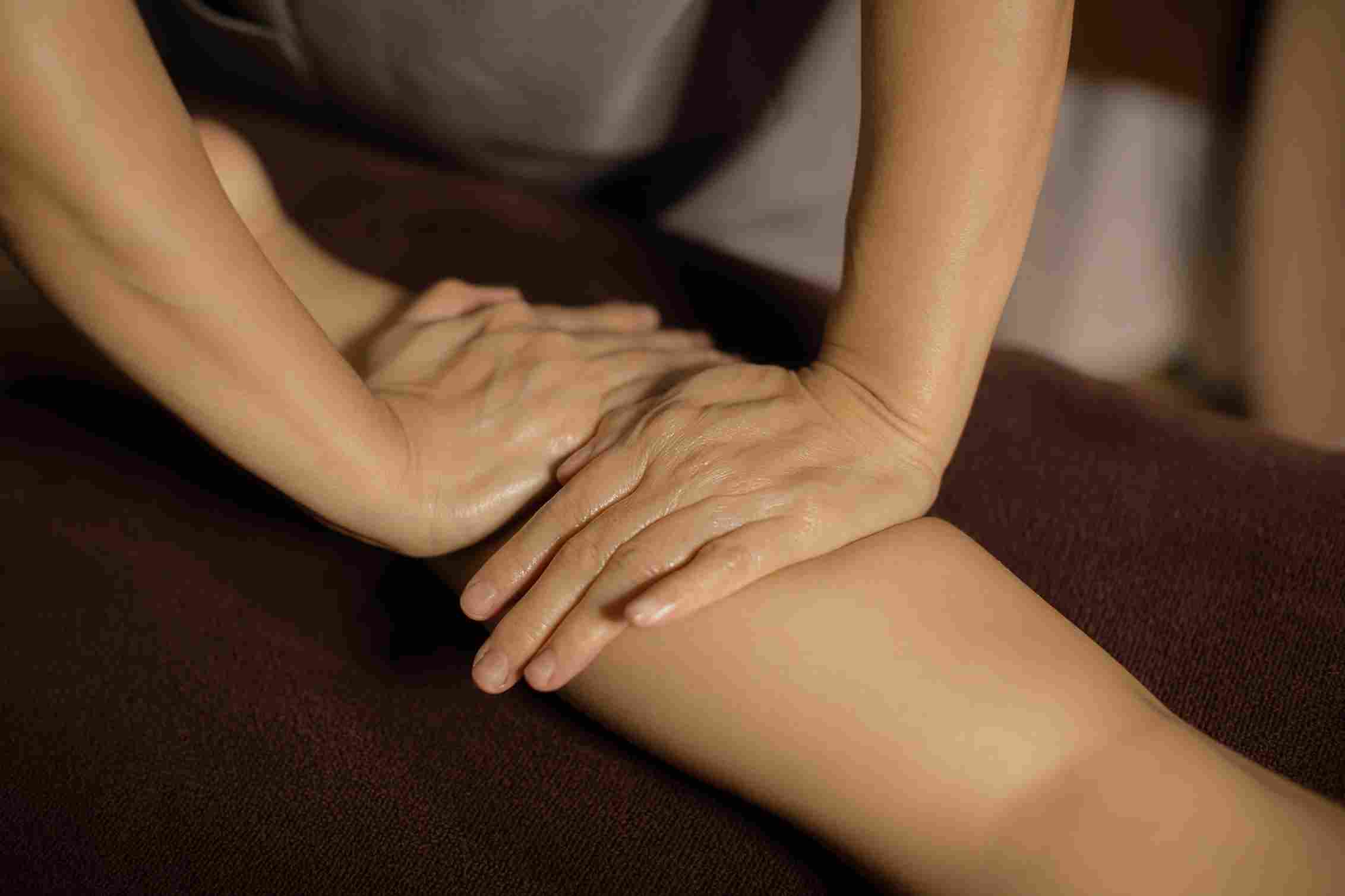
Recovery for heavy training legs
Built for runners, cyclists and anyone squatting and lunging weekly, where the quadriceps absorb impact and resistance session after session.
Who it suits: runners at every distance, cyclists, weight training and CrossFit athletes, golfers and tennis players, Muay Thai and gym regulars, and anyone carrying chronic postural tension from desk work who wants recovery aimed at the actual problem area.
Pre-event vs post-event sports massage: what changes
When you book matters as much as what the therapist does. A massage before a race and a massage after one have opposite goals, and treating them the same way can cost you performance or slow recovery.[6]
| Detail | Pre-event massage | Post-event massage |
|---|---|---|
| Goal | Prime the body and mind for movement | Reduce guarding and shift the body into recovery |
| Rhythm and pressure | Brisk, circulation-raising, moderate pressure — never deep enough to fatigue | Slower and lighter, focused on calming the nervous system |
| Recommended timing | Around 15–30 minutes before the activity | Light work in the first hours; deeper work after 24–72 hours |
| What to avoid | Deep pressure that leaves muscle fatigued before the start line | Deep pressure while tissue is still acutely inflamed |
The three questions first-timers ask most
1Does sports massage hurt, and why am I sore the next day?
Sports massage uses deeper pressure than a relaxation massage, so working through a tight band or thickened fascia usually feels like a dull, tolerable ache. Being sore for 24 to 48 hours afterwards — much like the day after a hard session — is normal and settles on its own. What is not normal is sharp, burning or breath-holding pain. Say so straight away and your therapist will ease the pressure. There is nothing to prove by enduring it.
2Can I book a sports massage straight after a marathon?
Not for deep work. Straight after a marathon the muscle is in an acute inflammatory state from the microscopic damage caused during the race. Wait roughly 24 to 72 hours until the repair process is underway, then book deep tissue work. If you want hands on you in the first few hours, keep it to light flushing strokes for circulation — not deep myofascial release.
3My muscles are inflamed after training. Will massage make it worse?
For ordinary delayed onset muscle soreness, light to moderate massage reduces the pain rather than adding to it. But if you have visible swelling, redness or heat, sharp pain in one specific spot, or you suspect a tear, skip deep pressure and see a doctor or physiotherapist first. Deep work on acutely inflamed tissue can re-injure it.
Why professional athletes schedule massage rather than wait for pain
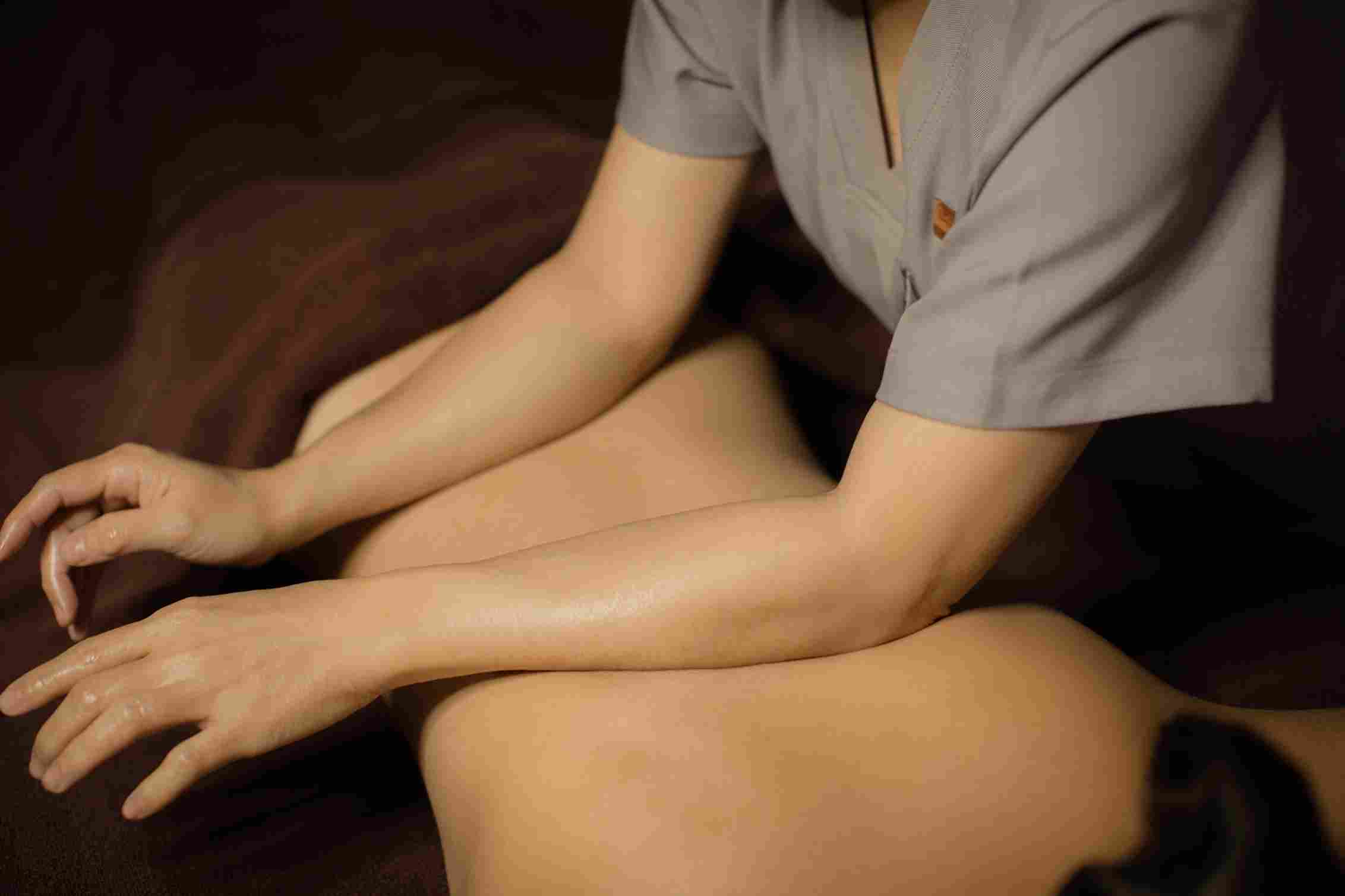
Realigning fibres and breaking down accumulated adhesions
When muscle is loaded hard and repeatedly, or sustains small tears at the microscopic level, the fibres can repair in a disorganised pattern. That leaves adhesions and scar tissue that stiffen the muscle and cost it elasticity. The pressure and cross-fibre friction used in deep transverse friction encourages those fibres to lie more parallel again and reduces adhesions that serve no purpose.
A systematic review and meta-analysis of massage for delayed onset muscle soreness found that massage genuinely reduces the sensation of muscle soreness after strenuous exercise, though evidence for a direct boost in muscle performance is weaker.[1][3] A separate trial combining massage with cold-water immersion likewise found reduced pain in athletes with DOMS.[2] That is why professionals book massage as a standing part of the training calendar rather than a response to pain.
In short: sports massage has research behind it for reducing soreness and getting muscle moving normally again sooner. It works alongside sensible training, sleep and nutrition. It does not replace the body's own recovery.
How often should you book a sports massage?
The right interval depends on your training load and how your tissue responds, so there is no single schedule that fits everyone. As a starting point:
Training hard every week: once or twice a week, which keeps adhesions from building faster than you can clear them.
General exercise, or desk-related neck and shoulder tension: every two to four weeks, adjusted to how you feel.
Just raced something big, like a marathon: leave 24 to 72 hours before any deep tissue work, and avoid it entirely on race day and the morning after.[6]
Sports massage at One Man Club and Take Care Salon of Beauty
A real session in progress. Plays muted — tap the clip for sound.
Private rooms, unhurried sessions, English-speaking therapists
Our therapists are trained specifically in sports massage technique. Every session opens with an assessment of your muscle condition and a short conversation about how you train, so the pressure and the techniques are chosen for your body rather than applied from a fixed routine. Treatment rooms are fully private and quiet, for men and women alike, which matters if you came to do serious recovery work rather than to be entertained.
Eight branches cover central Bangkok — Sukhumvit, Siam, Silom, Thonglor and beyond — all within walking distance of BTS or MRT stations, so you can keep massage in your training week instead of treating it as an occasional luxury. Bookings and consultations are handled in English.
What to do in the 24 hours after your session
Drink plenty of water. Circulation has been stimulated, and hydration helps the body clear what has been mobilised out of the muscle.
Skip hard training on the same day. Give the treated muscle at least 12 to 24 hours before loading it again.
If you feel sore, apply gentle warmth or do light stretching. Both ease the residual tightness rather than aggravating it.
Check in with yourself the next day. Unusual pain, swelling or redness that persists is worth showing to a doctor.
Sports massage in Bangkok: common questions
1How is sports massage different from Thai massage or oil massage?
Sports massage uses specific techniques — deep transverse friction, myofascial release and trigger point therapy — grounded in anatomy and sports physiology. Traditional Thai massage applies pressure along energy lines with passive joint stretching, and oil massage uses gliding strokes for relaxation. Sports massage goes directly to the overworked muscle group and the knots that have built up in it.
2What is the difference between pre-event and post-event massage?
Pre-event work is brisk and short, around 15 to 30 minutes, raising circulation and mobility without fatiguing the muscle. Post-event work is slower and gentler, easing cramping and helping the nervous system settle back into recovery.
3Do the therapists speak English?
Yes. Both One Man Club and Take Care Salon of Beauty work with a large international clientele in Bangkok, and take bookings and pre-session consultations in English by phone or LINE. Tell your therapist your sport, your problem areas and your pressure preference — that conversation is what makes the session work.
4It is my first visit. What should I tell the therapist?
Tell them what you train and how often, where the pain or tightness actually is, any previous injuries or surgery, and how much pressure you are comfortable with. Mention pregnancy, blood-thinning medication, recent fractures or skin conditions too, since those change what is appropriate.
5Should I book 60, 90 or 120 minutes?
Choose 60 minutes to treat one region properly — shoulders, back or legs. Choose 90 minutes for full-body coverage. Choose 120 minutes if you are training heavily or carrying several long-standing problem areas that each need real time.
6How much does a sports massage cost in Bangkok?
With us it is 1,800 THB for 60 minutes, 2,500 THB for 90 minutes and 3,400 THB for 120 minutes, in a private treatment room at any branch. That sits above a street-side shop massage and reflects the assessment, the technique training and the private room.
- [1] Guo J, Li L, et al. Massage Alleviates Delayed Onset Muscle Soreness after Strenuous Exercise: A Systematic Review and Meta-Analysis. Frontiers in Physiology, 2017. frontiersin.org
- [2] Angelopoulos P, et al. Cold-Water Immersion and Sports Massage Can Improve Pain Sensation but Not Functionality in Athletes with Delayed Onset Muscle Soreness. Healthcare, 2022. ncbi.nlm.nih.gov/pmc
- [3] Smith LL, et al. The Effects of Athletic Massage on Delayed Onset Muscle Soreness, Creatine Kinase, and Neutrophil Count. Journal of Orthopaedic & Sports Physical Therapy, 1994. jospt.org
- [4] The combined effect of myofascial release and hip strength training on iliotibial band syndrome: A preliminary randomized controlled trial. Physical Therapy in Sport, 2025. sciencedirect.com
- [5] Juchli L. Effectiveness of Massage Including Proximal Trigger Point Release for Plantar Fasciitis: a Case Report. International Journal of Therapeutic Massage & Bodywork, 2021. ijtmb.org
- [6] Timing guidance on pre-event and post-event sports massage and post-marathon recovery windows, synthesised from clinical sports-massage practice resources. active.com
This article is general information about massage for wellbeing and physical recovery. It is not a medical diagnosis or treatment. If you have severe pain, an acute injury, or suspect significant inflammation, consult a doctor or physiotherapist before booking.
Prices and Bangkok branches offering sports massage
Sports massage is available at every Take Care Salon of Beauty branch and at One Man Club Sukhumvit 35. Pick the branch that suits your route, then call to book or open the map for directions.
Book your sports massage in Bangkok
Targeted recovery for muscle that has done real work, in a private room at One Man Club and every Take Care Salon of Beauty branch.
Call your nearest branch to book, or add us on LINE to check available times.

Leave a Reply